
Belts are a must-have accessory for every wardrobe! While they’re most commonly used to keep loose pants up, you can also wear them around dresses, as a waist cincher, or just to pull an outfit together. How versatile!
Belts come with different buckles—the focal point of the whole accessory—and each type gives off a different vibe. If you want to learn about the most common types and how to style them effectively to get the most out of your belt game, let’s get into it!
The Frame Buckle Keeps It Classic
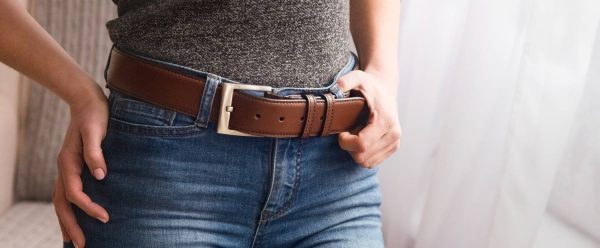
The frame buckle is the one you’ve seen your whole life. It’s a simple rectangular or square frame with a prong that slides through the belt holes. No frills, no fuss. That’s exactly why it works on almost everything.
Reaching for jeans and a button-down? Frame buckle. Dressing up for a business casual dinner? Still the frame buckle. It reads as put-together without trying to be the loudest thing in the room. When you want the rest of your outfit to do the talking, this is the one to grab.
The Western Buckle Brings History With It
Western-style buckles have a long history of craft and tradition behind them. These are large, often ornate buckles with engraved or embossed detailing. Commonly, they were given out as awards for rodeo events; the higher your placing, the bigger the buckle you were awarded. The designs would tell a story.
As western wear grew in popularity, people also began using statement buckles for everyday fashion. These buckles, predictably, work best with denim, boots, and anything with that ranchy, lived-in feel.
The Plate Buckle Makes a Statement
Don’t want to go overboard on accessories? The plate buckle is one statement piece that can add character to your look all on its own. This style features a flat, solid front—sometimes engraved, sometimes branded, sometimes totally minimal—and it sits flat against the belt for a sleek finish.
Plate buckles put the detail at the center of the waistband. They work especially well with leather belts and fitted jeans because the flat metal face breaks up a long line of denim and gives a tucked shirt a defined stopping point.
The O-Ring and D-Ring Buckles Work Smarter
These two get grouped together because they share a logic: instead of a prong, the belt threads through a metal ring to hold in place. The O-ring is circular; the D-ring has that flat edge. Both give you a more adjustable, relaxed fit.
Where do they shine? Casual outfits, linen pants, lighter fabrics, anything where a heavy metal prong would feel too stiff. They’re also a go-to for styling belts over flowy dresses or wrapping one around an oversized blazer. Functional and easygoing.
Your Buckle, Your outfit
Now that you know the main types of belt buckles, choosing one gets a lot less random. Each style has a natural home in your wardrobe—you just have to match the weight and vibe of the buckle to what you’re already wearing. A chunky western piece needs a bolder outfit to carry it. A sleek plate buckle does its best work when the rest of the look stays clean. Once you start paying attention to that balance, putting a belt together stops feeling like a guessing game.